Doctor vs Beautician:
Who Should Perform Your Aesthetic Treatments?
|
 |
|
|
| |
You may have seen news reports about unlicensed beauty centres and non-medical operators performing aesthetic procedures being caught by the authorities.
Choosing the wrong provider can lead to infections, complications, unsatisfactory results, or even severe health risks.
This guide will help you understand the key differences between doctors and beauticians, so you can make safe, informed decisions for your aesthetic journey. |
| |
|
|
|
|
|
|
|
|
1. Qualifications and Training Matter
|
| Aesthetic Doctor |
- Holds a medical degree (MBBS/MD) and is licensed with the Malaysian Medical Council (MMC)
- Requires at least 5 years of medical training to become a doctor
- To specialize as an aesthetic doctor, must complete 3 years of relevant experience and pass the LCP certification exam
- Trained in facial anatomy, injection techniques, and complication management
- Every treatment performed must be supported by specific training and certification
- Legally permitted to perform medical aesthetic procedures, including fillers, skin tightening treatment, lasers, and more
|
| |
| Beautician |
- Does not hold any medical-related certification or licensure
- Training is often provided by non-authorised or unapproved sources
- Can only perform non-medical-grade facials, massage, and cosmetic procedures
- Cannot inject, prescribe medication, or manage medical complications
Key Takeaway: Treatments involving injections, lasers, or medical-grade devices should always be performed by a licensed doctor. |
| |
|
|
|
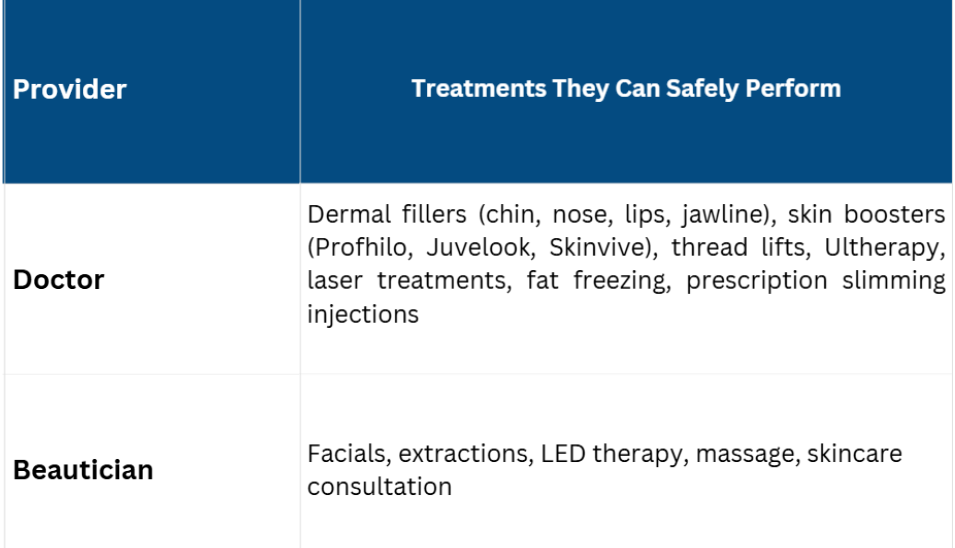
| 2. Treatments Doctors vs Beauticians Can Perform |
| |
 |
| |
| |
3. Safety and Complication Management
Doctors
•Can screen your medical history and identify contraindications
•Understand complex facial and body anatomy
•Equipped to handle complications immediately
•Use sterile environments and approved medical devices
Beauticians
•Focus on skin maintenance and relaxation
•Cannot handle medical emergencies
Must refer any complication to a licensed doctor |
| |
| |
4. Why Doctor-Performed Treatments Cost More
Medical aesthetic procedures may come at a higher price because they involve:
Expertise and professional training
FDA/CE-approved products and medical devices
Clinical-grade sterile environment
Emergency preparedness and safety protocols
Remember: your safety and results are worth the investment. |
| |
| |
5. How to Choose a Safe and Qualified Clinic
When choosing a clinic, consider:
•Is the practitioner a licensed medical doctor?
•Are the devices and products approved for medical use?
•Can you see before-and-after results from real patients?
•Avoid clinics offering “cheap fillers” or “unrealistic promotions”
|
|
|
| |
| |
| |
.jpeg "LyVin Clinic | Lyvin Clinic JB | Aesthetic Clinic | Aesthetic Clinic JB") |
|
Book Now:
|
| Book a consultation and see why so many patients call us their #1 aesthetic clinic in Johor Bahru. |
| |
|
|
| |
|
|
| |
|
|
| |
| Book Now » |
|
|
|
|
|
|
|
|
|
|
|